
Convenient/ Conveniente
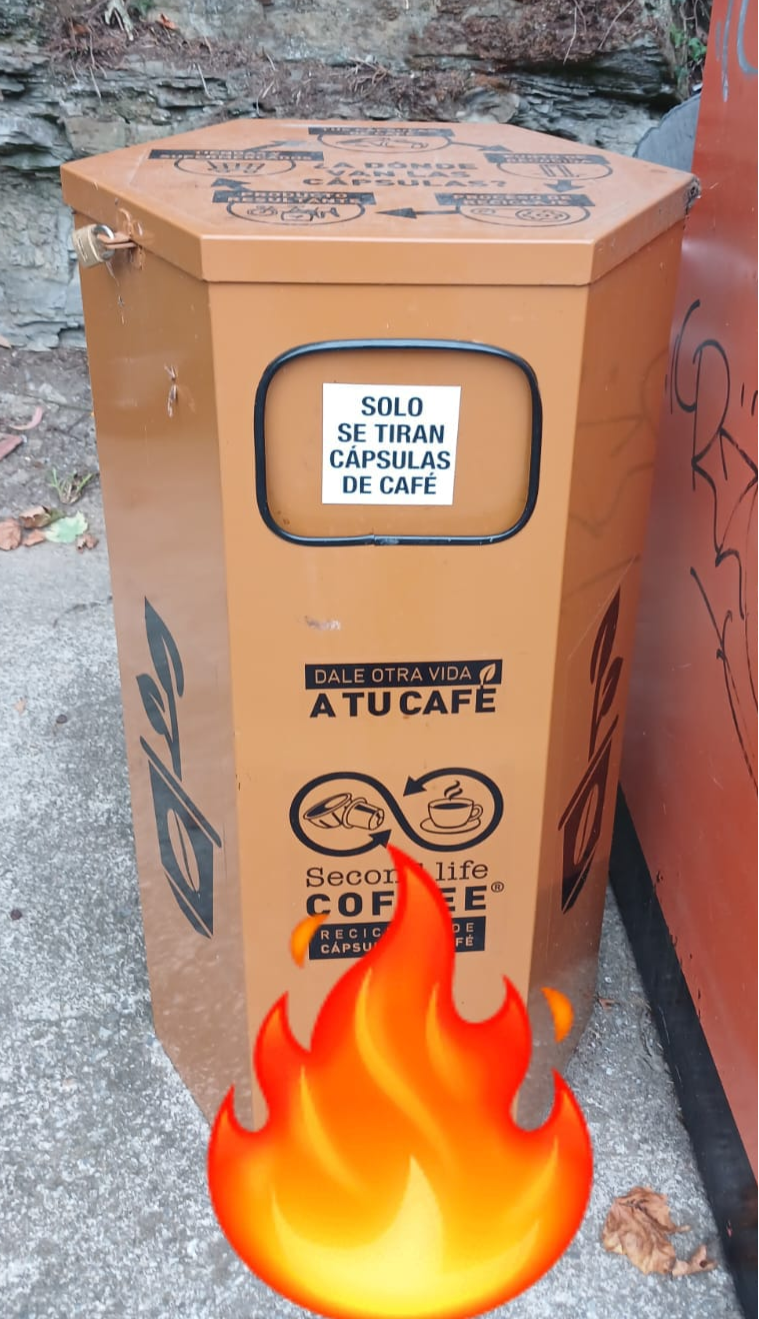
Burn your capsule coffee maker/ Quema tu cafetera de cápsulas

(Español tras la foto)
Convenient
A few months or years ago, I came across a video on the internet of a supermarket, I think in Spain, showing a new machine that could peel and cut a pineapple in seconds so you can take it home in a plastic container, ready to eat. The video was followed by hundreds of comments, from salespeople talking about the machine’s effectiveness, parents praising the idea, and people criticizing the need to generate more plastic when pineapples already come in their own natural packaging. It reminded me a little of the case of the capsule coffee machine, that object that found its way into kitchens around the world as a symbol of sophistication and convenience. I’m not going to wait until the end of this newsletter to say what I think about capsule coffee machines: they are unnecessary, they have no advantages, they are a fraud. I understand that George Clooney is very handsome, that the capsules have pretty colors, that pressing the button gives us a dopamine rush, that there is always room for one more little machine that promises us happiness. I get it. However, if we get to the heart of the matter, there is no capsule coffee machine in the world that can match freshly ground coffee prepared in a French press or a traditional Italian espresso machine. And now we know (well, some people have known for a long time) that capsules cannot be recycled, that they end up in the oceans, and that they are also bad for our health because of the chemicals they contain. Convenient?
The husband of my first boss in Toronto worked creating marketing campaigns for visa, the credit card company. My boss told me that visa’s focus, at least in those days, was on creating increasingly convenient services and products. If you think about it, in a short time we went from having to enter a PIN and sign a receipt every time we paid with a card to simply tapping the card, or even our phone, on the payment terminal. It’s getting easier, more convenient, and faster. She told us that we should apply that same principle to the environmental programs we were designing, making them as simple and convenient as possible. I totally agree. However, it’s a losing battle. As long as the economic system considers the social and environmental impacts of an activity to be externalities, as long as our consciousness does not develop and we continue to fail to understand the interconnectedness and interdependence of all life on this planet, the throwaway culture will continue to reign supreme. We could justify this principle of convenience above all else on the premise that we are a society that worships hedonism, good living, and well-being. We are destroying our home, but it is justified because it allows us to live well, with plenty of free time, good health, joy, and a vibrant community. We all know that our current era is not defined by any of these characteristics. So, what is all this convenience for? Where does the time we save by using a capsule coffee machine, buying ready-made meals, or carrying pineapple in a plastic container go?
Comfort is necessary, but we must be wary of its dark side. If we don’t keep it in check, we can easily be seduced by its close cousins: laziness, apathy, complacency. Sometimes there are benefits to be found in discomfort, inconvenience, and annoyance. There are ancient traditions such as meditation that use discomfort to explore, understand, and cultivate our inner selves. Sitting down to meditate for an hour without moving, being in the present moment with an itchy nose or sore knee, not reacting, simply breathing and letting it pass, can give you a lot of information about who you are. The same is true when you sit in a sweat lodge and endure the oppressive heat and dense air, or train for a marathon and endure exhaustion and fatigue, or play the guitar for hours to improve your technique despite frustration and sore fingers. Embracing discomfort, in the short term, can open a door to unknown, beautiful, and profound places. Burn your capsule coffee maker.
Thanks for reading and take care,
Jose
(Scroll up for English)
Conveniente
Hace unos meses o años me apareció en internet un vídeo de un supermercado, creo que en España, que mostraba una nueva máquina que permitía pelar y cortar una piña en segundos y así llevártela a casa en un bote de plástico ya lista para comer. Al vídeo le seguían cientos de comentarios, desde personas del departamento de ventas hablando de la efectividad de la máquina, madres y padres de familia que alababan la idea y personas que criticaban la necesidad de generar más plástico cuando la piña ya trae su propio envase natural. Me recordaba un poco al caso de la cafetera de cápsulas, ese objeto que se insertó en las cocinas de medio mundo como sinónimo de sofisticación y conveniencia. No voy a esperar al final de este boletín para decir lo que pienso sobre las cafeteras de cápsulas: no son necesarias, no tienen ninguna ventaja, son un fraude. Entiendo que George Clooney es muy guapo, que las cápsulas tienen colores bonitos, que darle al botón nos da un subidón de dopamina, que siempre hay espacio para una maquinita más que nos promete la felicidad. Lo entiendo. Ahora bien, si vamos al meollo de la cuestión, no existe cafetera de cápsulas en el mundo que iguale a un café recién molido y preparado en la prensa francesa o la máquina de espresso italiana de toda la vida. Y ahora sabemos (bueno, algunos ya lo sabían desde hace tiempo) que las cápsulas no se pueden reciclar, que acaban en los océanos y que además son malas para la salud por los químicos que tienen. ¿Conveniente?
El esposo de mi primera jefa en Toronto trabajaba haciendo el marketing para visa, la empresa de tarjetas de crédito. Ella me contaba que el enfoque de visa, al menos en aquellos años, era el crear servicios o productos cada vez más convenientes. Si lo piensas, en poco tiempo pasamos de tener que poner el número secreto y firmar el recibo cada vez que pagábamos con tarjeta a simplemente acercar la tarjeta, o incluso el teléfono, a la terminal de pago. Cada vez más sencillo, más cómodo, más rápido. Mi jefa nos decía que debíamos aplicar ese mismo principio a los programas medioambientales que estábamos diseñando, que fueran lo más sencillos y convenientes posibles. Totalmente de acuerdo. Sin embargo, es una batalla perdida. Mientras el sistema económico considere como externalidades los impactos sociales y ambientales de una actividad, mientras nuestra conciencia no se desarrolle y sigamos sin entender la interconexión e interdependencia con toda la vida en este planeta, la cultura del usar y tirar seguirá reinando. Podríamos justificar este principio de comodidad ante todo bajo la premisa de que somos una sociedad con culto al hedonismo, al buen vivir, al bienestar. Estamos destrozando nuestra casa pero está justificado porque nos permite llevar unas vidas plenas, con mucho tiempo libre, buena salud, alegría y una comunidad vibrante. Todas y todos sabemos que nuestra época actual no está definida por ninguna de esas características. Entonces, ¿Para qué toda esa conveniencia? ¿A dónde va el tiempo que nos ahorramos usando la cafetera de cápsulas, comprando comida precocinada o llevándonos la piña en un bote de plástico?
La comodidad es necesaria, pero hay que vigilar su lado oscuro. Si no la mantemos a raya, podemos fácilmente dejarnos seducir por sus primas cercanas la pereza, la desidia, la complacencia. A veces se encuentran beneficios en la incomodidad, en el inconveniente, en la molestia. Hay tradiciones milenarias como la meditación que se sirven de lo incómodo para explorar, conocer y cultivar nuestro Yo. Sentarse a meditar durante una hora y no moverse, estar en el momento presente con el picor de nariz o el dolor de rodilla, no reaccionar, simplemente respirar y dejar que pase, puede darte mucha información sobre quién eres. Lo mismo ocurre al sentarte en un temazcal y aguantar el calor agobiante y el aire denso, o entrenar para una maratón y aguantar el cansancio y fatiga, o tocar una guitarra durante horas para mejorar la técnica a pesar de la frustración y el dolor de dedos. Abrazar lo inconveniente, en el corto plazo, puede abrir una puerta hacia lugares desconocidos, bellos y profundos. Quema tu cafetera de cápsulas.
Gracias por leer y hasta pronto,
Jose